CAM DRIVE
Conservation of Angular Momentum (CAM) Drive
Propellantless propulsion technology that generates thrust by rotating working fluid inside a toroidal cavity, rather than expelling propellant. Patent #10,604,255, "Lifting System Machine with Methods for Circulating Working Fluid." Patent utility application filed for NSF Phase I, "Methods of Bi-directional Angular Momentum Couple Control with Rotating Working Fluid," USPTO Application #19/361,094 (pending).
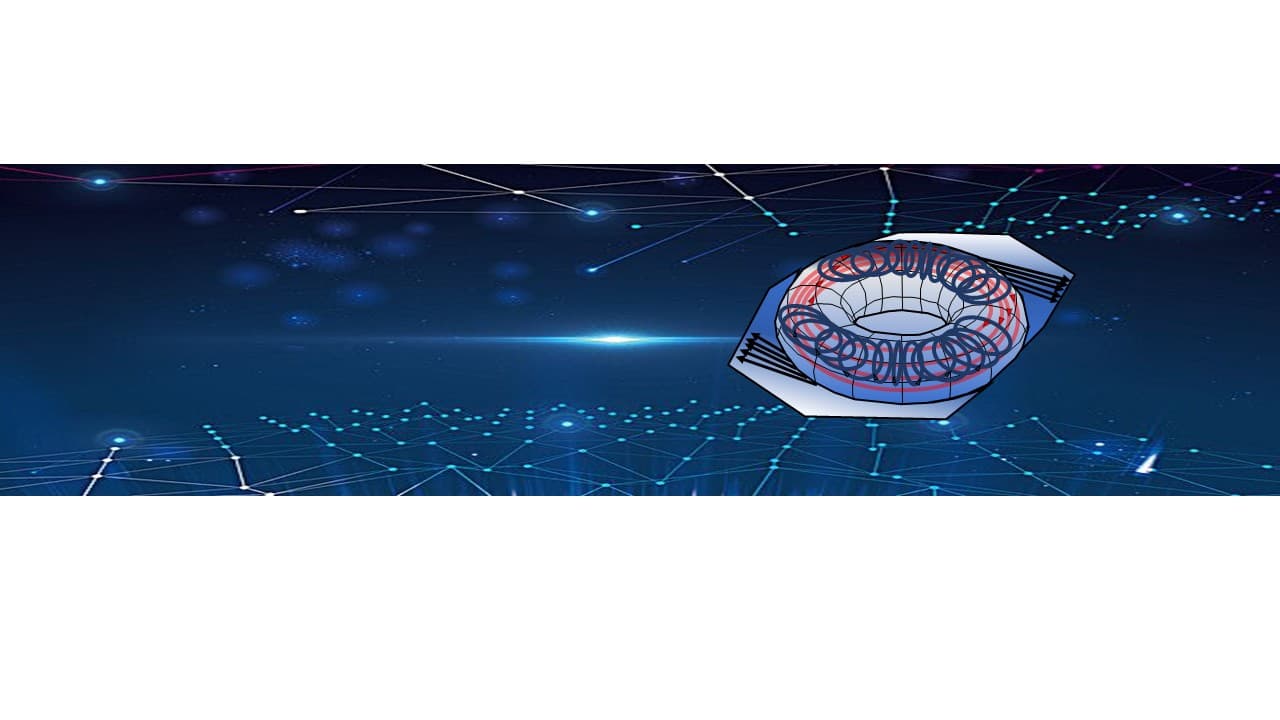
What is the CAM Drive?
Watch this technical overview of propellant-free spacecraft technology
Propellant-Free Spacecraft: The Future of Debris Removal and Orbital Mobility
View All Videos →Technical Explanation
How It Works
Think of a figure skater spinning. When they pull their arms in, they spin faster. The CAM Drive uses this same physics principle—conservation of angular momentum—to generate directional thrust.
The Physics:
By rotating working fluid gas inside a toroidal cavity and changing its angular momentum and rotational energy, the system generates thrust while preserving total angular momentum. The process occurs in an ambient pressure enclosure rather than vacuum.
Key Advantages
Propellantless
Zero propellant consumption. Unlimited operational lifetime without refueling.
vs Hall Thrusters
Thrust-per-watt advantage over conventional Hall-effect thrusters — the clearest differentiator for VLEO and LEO smallsat operators.
At 500 Watts
TRL 3 demonstrated thrust matching NASA's AEPS Hall thruster, which needs 12,500 W for the same 0.6 N — at low, smallsat-friendly power.
kg Class
Sized for small satellites operating in VLEO and LEO for national security and commercial Earth observation missions.
CAM Drive vs Hall Thrusters
For smallsat operators, the constraint is power, not just fuel. CAM Drive produces Hall-thruster-class thrust at a fraction of the input power — with no propellant to run out.
| Metric | CAM Drive (TRL 3) | NASA AEPS Hall Thruster |
|---|---|---|
| Thrust | 0.6 N | 0.6 N |
| Input Power | 500 W | 12,500 W |
| Propellant | None | Xenon / Krypton |
| Mission Life | Unlimited | Propellant-limited |
Figures reflect Montgomery County Tech Innovation Fund TRL 3 prototype testing. AEPS is NASA's highest-power flight Hall thruster.
Proven Physics. Clear Path to Flight.
Phase I testing (NSF STTR) successfully demonstrated the core angular momentum couple effect. We are executing a funded path to flight qualification, not chasing a concept.
NSF STTR demonstrated the angular momentum couple effect.
0.6 N at 500 W on Tech Innovation Fund prototypes.
Advancing to qualification with U.S. Space Force ecosystem support.
Patent #10,604,255 granted; bi-directional control application pending.
Led by Dennis Lee, a 48-year aerospace engineering veteran with extensive NASA and USAF flight hardware experience.
Technical Specifications
Propulsion Method
Conservation of Angular Momentum (CAM) Drive using rotating working fluid in toroidal cavity. Patent #10,604,255 granted; USPTO Application #19/361,094 (pending).
Energy Source
Solar electric propulsion (SEP) powers the CAM Drive system
Power Advantage
CAM Drive delivers Hall-thruster-class thrust at a fraction of the input power
Applications
- ▸Smallsat primary propulsion (200–1,200 kg)
- ▸VLEO drag make-up and station-keeping
- ▸LEO orbital maneuver and repositioning
- ▸National security and commercial EO missions
Emergency Propulsion Retrofit
CAM Drive can be retrofitted as an emergency propulsion system for existing spacecraft. When conventional propellant systems fail, CAM Drive provides unlimited backup thrust capability for station-keeping, debris avoidance, and safe deorbiting.
Learn More About CAM Drive
Request technical documentation, white papers, and patent details.